
Doing more for soil conversation through ALUS

Darren and Brenda Peters have been farming together for 21 years on Somerset Farm in Maple Plains and have been Alternative Land Use Services program (ALUS) participants for eight of those years. As farmers, they produce potatoes, carrots, soybeans, cereals and forages using a five-year crop rotation plan. As ALUS participants, they produce ecosystem services.
“PEI soils are highly erodible by nature,” said Darren Peters. “The ALUS program helps us establish projects that conserve soil on the farm, which is a win-win for everyone.”
The Peters family have retired 12 acres that were so steeply sloped that keeping them in annual crops would have contributed to excessive soil erosion. As ALUS projects, these acres now produce ecosystem services instead.
The ALUS program has also helped the Peters' implement soil-conservation projects on 19 farmed fields. These include more than 12,000 feet of permanently grassed waterways, 6,000 feet of terraces, nearly 300 feet of berms, and buffer zones around the perimeter of the fields—all clever methods to reduce soil erosion.
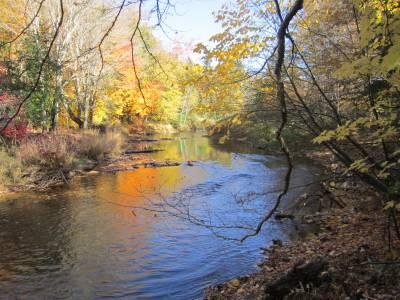
Somerset Farm has many fields that border on the Southwest Brook, a major tributary to the Dunk River which flows through the community of Kinkora and is renowned for trout fishing.
“To us, it's important to conserve the soil on the farm for future generations,” said Darren. “ALUS enables us to do more to protect PEI’s streams.”
In recognition of their commitment to soil conservation and sustainable agriculture practices, the Peters were awarded a PEI Soil and Crop Improvement Association Soil Conservationist Award in 2016.
Darren and Brenda intend to continue to implement ALUS projects in the years to come.