Lung Health: Taking Care of Your Lungs

Lung cancer is the leading cause of cancer death on PEI with an average of 96 people dying from lung cancer each year. Lung cancer is often diagnosed in the late stages, when treatment is more difficult. Source: PEI Cancer Registry, 2024.
What is Lung Cancer?
Lung cancer starts in the cells of the lung, where abnormal cells grow uncontrollably to form a tumor. It can destroy nearby tissue and spread (metastasize) to other parts of the body. The lungs are part of the respiratory system, located on either side of the heart. The right lung has three lobes, while the left lung has two.
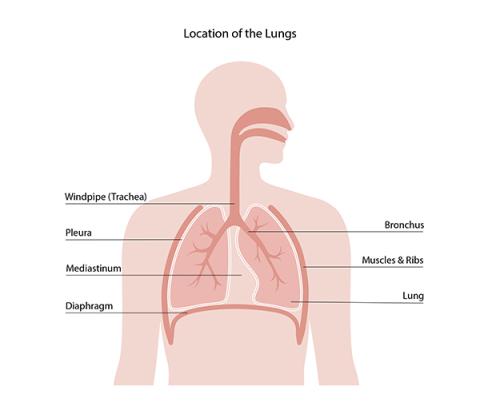
Lung cancer is classified into two main types:
- Non-Small Cell Lung Cancer (NSCLC) is the most common type, which usually starts in glandular cells in the outer part of the lung (adenocarcinoma) or in thin, flat cells lining the airways (squamous cell carcinoma). It also includes large cell carcinoma and mixed tumors.
- Small Cell Lung Cancer (SCLC) is a less common but aggressive type that usually starts in the bronchi (large airways) and spreads quickly to other parts of the body.
Protecting your lung health
There are many ways to lower your risk of lung cancer:
- Quit smoking - It’s never too late to quit — and help is available. Quitting smoking lowers your risk of lung cancer and other diseases like heart attack, stroke, and COPD.
- The PEI Smoking Cessation Program offers free support and tools to help you quit.
- The Smokers' Helpline provides support for individuals looking to quit smoking or vaping. It offers free, confidential counseling and resources to help smokers at any stage of quitting. Call 1-877-513-5333 (toll-free).
- Traditional Tobacco - Traditional tobacco plays a vital role in many Indigenous cultures. It is recognized as one of the four sacred medicines, along with cedar, sage, and sweetgrass. This type of tobacco is different from commercial products that are linked to lung cancer. For more information, visit the First Nations Health Authority article on Respecting Tobacco.
- Avoid second-hand smoke - Avoid places where you are exposed to tobacco smoke.
- Test your home for radon - Radon is an invisible, odorless gas that can build up in homes and cause lung cancer. You can:
- Order a test kit from the Lung Association of Nova Scotia and PEI or Take Action on Radon
- Borrow a kit for free from the PEI Provincial Library Service
- Stay physically active - Even small amounts of activity support healthy lungs.
- Know your family history - Talk to your provider if you have a family history of lung cancer.
For more information about potential risk factors, visit Risks for lung cancer (Canadian Cancer Society).
Screening for Lung Cancer
Screening helps detect lung cancer in people who don’t have any symptoms yet. Research shows that a low-dose CT scan, which uses a small amount of radiation, can find lung cancer early in people who are at high risk. This early detection improves the chances of successful treatment and survival. People who smoke or have smoked are at the highest risk for lung cancer.
If you aren’t at high risk, screening isn’t recommended, as there isn’t enough evidence that it helps people who don’t have risk factors or symptoms.
For more information about lung cancer screening, visit Screening for lung cancer (Canadian Cancer Society).
Coming Soon
Plans are underway for a PEI Lung Cancer Screening Program. Check back to this web page for more details.
|
|
You can now access your diagnostic imaging reports and laboratory test results online through your MyHealthPEI account. |


PO Box 2000
Charlottetown, PE C1A 7N8
Phone: 902-368-6130
Fax: 902-368-6136
If you are experiencing a medical emergency, call 9-1-1 or go to the nearest emergency department.
If you are unsure what to do about a health issue or if you need health information,
call 8-1-1.